Preventing SIDS: Safe Sleep Guidelines Every Parent Should Know
To reduce the risk of SIDS, put babies under one year to sleep on their backs on a firm mattress, room-share with parents without bed-sharing, avoid overheating and nicotine exposure, keep loose items out of the crib, and consider offering a pacifier at sleep time.
What Is Sudden Infant Death Syndrome?
According to the Taiwan Pediatric Association's prevention guidelines and related research, sudden infant death syndrome (also known as cot death or crib death, abbreviated SIDS) is diagnosed only when an infant under one year of age dies without warning and no cause of death can be found even after an autopsy and investigation. It typically strikes during sleep, most often between midnight and 9 a.m., and there is usually no evidence of struggling or crying out before death.
The earliest research into its mechanisms found that stomach sleeping was one of the risk factors. Countries such as New Zealand and Australia identified prone sleeping as a danger and began campaigning against it. The United States took notice and launched its “Back to Sleep” campaign, which led to a dramatic drop in infant deaths.
What Causes SIDS?
SIDS results from an infant's physical makeup interacting with environmental factors — including premature birth, side or stomach sleeping, incubator temperature, being accidentally smothered while sharing a bed with family, airway obstruction, and more. So how can we reduce the risk?
- Put babies under one year to sleep on their backs
- Use a firmer mattress
- When sleeping near a caregiver, use a barrier, and keep loose items off the bed
- Keep the sleep environment on the cool side
- Avoid exposure to cigarette smoke
- Breastfeed
- Keep vaccinations up to date
How to Prevent SIDS — Guidelines from the Taiwan Pediatric Association
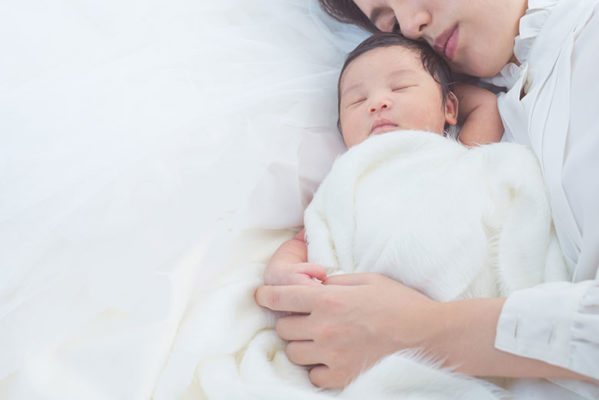
For complete, detailed information, visit the Taiwan Pediatric Association's official website. Here are the key points:
- Bed-sharing with others is not recommended, but babies should sleep in the same room as their parents. Even twins should sleep in separate beds.
- Keep babies on their backs; avoid side sleeping
- Use a firm, non-plush mattress wrapped with a fitted cover
- Let the baby sleep on a solid, firm mattress — never an old mattress or a sofa
- Protect the baby from nicotine exposure
- Don't let the baby wear protective amulets, necklaces, or anything else that could block the airway
- Never prop a bottle in a baby's mouth and leave them unattended
- Consider offering a pacifier during sleep
- Avoid overheating, including overdressing. Without air conditioning, make sure the room is well ventilated.
- To promote development and prevent a flat head, give the baby supervised tummy time while awake
References:
- American Academy of Pediatrics. Lee CL, Chung TL. SIDS and other sleep-related infant deaths: expansion of recommendations for a safe infant sleeping environment. Pediatrics 2011;128(5):1030-9.
- Andres V, Garcia P, Rimet Y, Nicaise C, Simeoni U. Apparent life-threatening events in presumably healthy newborns during early skin-to-skin contact. Pediatrics 2011;127:e1073–6.
- Prevention guidelines from the Taiwan Pediatric Association
FAQ
Should babies sleep on their back or their stomach?
Babies under one year should always be placed on their backs — avoid side and stomach sleeping. Research identified stomach sleeping as a risk factor for SIDS, and cases dropped sharply in the US after its back-sleeping campaign. While awake, supervised tummy time supports development and helps prevent a flat head.
Should a baby's mattress be soft or firm?
Babies should sleep on a firm, non-plush mattress wrapped with a fitted cover — never an old, sagging mattress or a sofa. Keep loose items off the bed, and avoid amulets, necklaces, or anything else that could block the airway.
Can a baby sleep in the same bed as mom and dad?
The Taiwan Pediatric Association recommends against bed-sharing with anyone, but babies should sleep in the same room as their parents — even twins should sleep in separate beds. If a baby does sleep beside a caregiver, use a barrier to prevent accidental smothering.