Why Choose a Latex Mattress? Benefits, Drawbacks, and Buying Tips
A latex mattress delivers both comfort and support: it is highly resilient and durable, conforms to any body weight, resists heat buildup thanks to its high specific heat, and is naturally hypoallergenic. Its downsides are higher prices and stronger motion transfer, so choose branded products with proper test certificates.
Older Taiwanese consumers will remember that latex products used to be very expensive. Only in the past decade or so have they become popular and widely used in mattresses and bedding. As the technology matured and the market diversified, latex products now come in different grades, formulas, and manufacturing processes — including “latex-like” fully synthetic foams — so prices now span the low, mid, and high ends of the market in a way that was once unimaginable.
Today, virtually every high-end mattress on the market includes at least one layer of latex, thick or thin, and some are all-latex designs built primarily around the material. The two most important qualities of a mattress are comfort and support, and latex delivers both — so after reviewing sources from Taiwan and abroad, we've put together the most complete explanation we can.
The Advantages of Latex
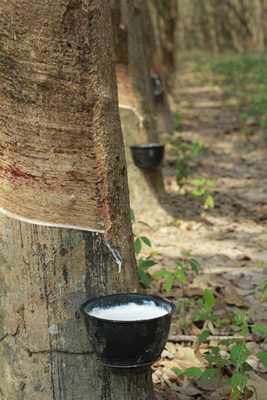
- Durability: Latex is a high-density foamed product made from natural rubber sap. Like other rubber products, it is highly elastic and springs back to its original shape even after years of use.
- Support: Foamed latex has a porous, airy, breathable structure. When pressure squeezes down from above, that structure becomes denser; high density combined with latex's elasticity creates high-rebound support. Different weights compress to different depths — the deeper the compression, the stronger the rebound — which ensures that people of any body weight get the same close-fitting, supportive feel.
- Temperature: Latex doesn't change temperature easily. Scientifically speaking, it is a high-specific-heat material — it takes a great deal of heat energy to raise its temperature even slightly, meaning the environment can't easily warm it up. Its porous structure and the ventilation holes built into the mold design further improve heat dissipation. That means less tossing and turning, and in turn better sleep quality.
- Hypoallergenic: Latex is a naturally low-allergen material; only a very small number of people are allergic to it. When the latex formula includes anti-allergen design, it can be used with even more peace of mind. Direct contact still isn't recommended, though — every mattress should be covered with a mattress protector or fitted sheet — and most latex allergies come from direct, long-term contact, as with medical latex gloves.
About Temperature
Even though many people insist that latex products sleep hot, the science says the opposite. Feeling hot usually comes down to environmental factors and poor ventilation design. If the sleeper naturally runs hot and the room can't shed that heat quickly, then latex — which has no active cooling properties, and whose heat conduction and breathability are nothing out of the ordinary — cannot let the heat trapped at the skin's contact surface evaporate and escape, so it feels stuffy. An all-latex mattress has to rely on a generously perforated mold design to compensate, while a pocket spring mattress can change the contact-surface design to manage moisture and heat dissipation.
The Drawbacks of Latex
- Price: Natural latex prices rise year after year, and global demand outstrips supply. With many developing countries on the rise, genuinely natural raw material has become scarce. Each rubber tree yields only a tiny amount of latex per day, which means large-scale planting is needed to secure production — but the limited range of suitable growing environments and ecological conservation concerns make expanding acreage difficult. Today production is concentrated mostly in Southeast Asia. So if you spot a cheap latex product, look closely at its quality — it may contain more synthetic material, or have been made under unfriendly conditions with inferior technology.
- Pressure relief: Latex earns good reviews here, but next to memory foam and other highly pressure-conforming materials it doesn't stand out. Latex's springiness changes with density — higher density means firmer — so mattresses usually add cushioning materials to the overall build to adjust comfort. All-latex mattresses draw mixed reviews, while latex pocket spring mattresses can adapt the experience through design.
- Motion transfer: Latex is highly elastic, which means motion travels through it easily. In terms of disturbance isolation, it doesn't perform as well as a memory foam mattress.
Where Natural Latex Comes From
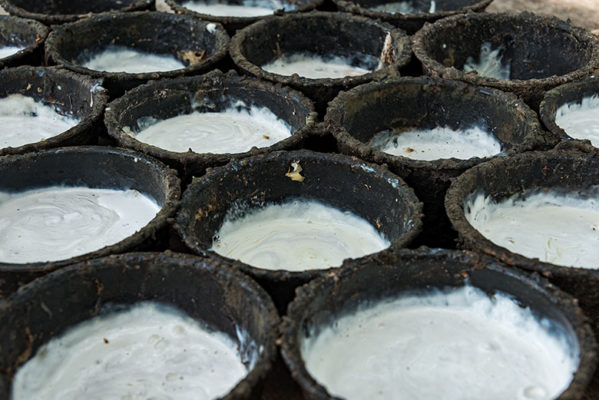
The world's main natural rubber producers are concentrated in Southeast Asia, Africa, and Central and South America. Southeast Asian countries such as Thailand, Malaysia, and Indonesia account for 67% of global rubber production and 79% of global exports, while the main consumer nations are the United States, China, and Japan. According to Chinese statistics, China has been the world's largest rubber consumer and natural rubber importer for six consecutive years, with import dependence as high as 70%. China grows natural rubber of its own, but its self-sufficiency rate has fallen below 30%. With China's continued growth and the influence of oil prices, natural rubber prices are expected to stay stubbornly high.
Malaysian Latex and the Global Picture
Internationally there are plenty of latex products to choose from, but in the Taiwanese market specifically, consumers favor Malaysian latex, followed by Thai, Sri Lankan, and other Southeast Asian origins. The preference for Malaysian latex dates back to the 1980s, when Malaysia was the world's largest latex exporter (Standard Malaysian Rubber, SMR). But from 1960 onward, shifts in national policy and cash crops (the introduction of oil palm) saw rubber trees felled and turned into furniture, while large numbers of rubber farmers switched crops or sold their plantations, steadily shrinking the country's rubber acreage. This means Malaysia has become a major rubber consumer itself — while remaining one of the world's largest export suppliers.
Generally speaking, China, Japan, and South Korea can leverage diplomatic advantages to secure higher-grade natural rubber. Thailand leads ASEAN, and China uses large purchases of Thai natural rubber as a diplomatic tool. More importantly, under the ASEAN Plus Three Cooperation (APT) framework, these countries trade tariff-free. Taiwan cannot obtain those tariff reductions, so to stay price-competitive it settles for cheaper natural rubber from Vietnam. As things stand, Thailand has effectively become the highest-quality origin for natural latex — which is exactly why counterfeits claiming Thai origin keep appearing.
How to Choose a Latex Product
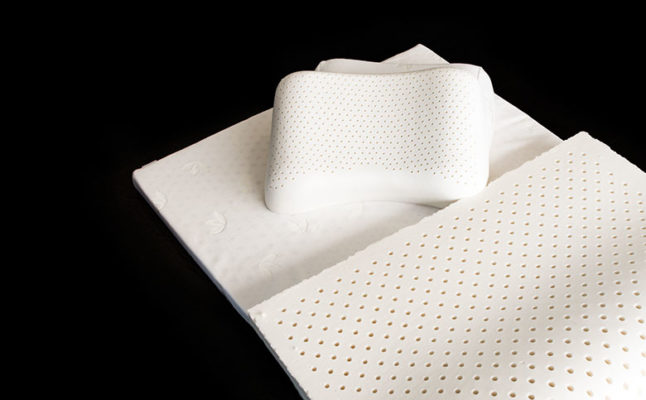
Latex mattresses are hugely popular in Taiwan, so they're easy to buy — but you'll notice that any fully imported mattress containing latex costs more, and even then it depends on the raw material's origin and its test certificates. If you've ever bought a latex topper in a Thai production region, you'll know that a 5 cm piece with over 90% latex content doesn't come cheap — importing a single 5 cm layer directly from the factory at origin costs us over NT$10,000. So when a mattress claiming to contain Thai latex sells for under NT$10,000, you really have to think twice — not to mention the pairs of “Thai natural latex” pillows selling for under NT$1,000.
For products imported from other origins, some exclusive importers can already provide substantial supporting documentation. If all a seller can show is a customs import declaration, be more cautious: origin does not equal quality grade, and importers won't share sourcing details in order to protect their pricing — even we as a manufacturer can't get them. There's also the risk of goods trans-shipped to Taiwan from other countries via mainland China, because the declaration only shows where the shipment came from, not where it was made.
It's not that Chinese quality is inherently poor — but China is the world capital of high-grade imitation. The genuinely good products are hard to buy even inside China, fetching sky-high prices with no guarantee of authenticity. Under those conditions, would anyone really sell the good stuff abroad at a discount? So choosing branded latex is the safer approach — with a distributor vetting quality and complete test documentation on hand. It costs more, but it ensures consistent quality.
Beyond the latex itself, the formula, manufacturing process, mold design, and quality control all affect value. European latex makers place particular emphasis on hypoallergenic and eco-friendly credentials. According to latex manufacturers, Caucasians have a higher rate of latex allergy, hence the special attention to allergies. As for the environment: latex production generates significant chemical pollution and uses large amounts of water for washing. If that wastewater is discharged without proper treatment, it damages the environment — something developing countries may police loosely but developed countries take very seriously. All of that, of course, is cost.
Mold designs come in many varieties — some target breathability, others multi-zone firmness and support. And quality control goes without saying: the more a company treasures its brand, the more it cares about QC.
**The bottom line:
Is latex a must-have? In our view, no — but adding latex enriches the sleep experience: that springy, responsive support, a naturally body-hugging contour, and peak comfort that lasts longer. All good reasons to put it on your list of options.
**
References:
ITRI IEK — Global Natural Rubber Market Overview
Bureau of Foreign Trade, Ministry of Economic Affairs — Trade Information Portal
Taiwan ASEAN Studies Center
Trade Insight Biweekly
Science Online — High Scope Natural Science Education Resource Platform
With gratitude to the industry veterans whose tireless dedication built this field
FAQ
Do latex mattresses sleep hot?
Scientifically, latex is a high-specific-heat material, so its temperature doesn't change easily — feeling hot usually comes from the environment or poor ventilation design. All-latex mattresses rely on perforated mold designs to dissipate heat, while latex pocket spring mattresses can adjust the contact-layer design to manage moisture and heat.
Are cheap latex mattresses worth buying?
Be very careful. Natural latex is in short supply and prices rise every year — importing a single 5 cm high-content latex layer costs over NT$10,000. A mattress claiming Thai latex yet priced under NT$10,000 likely contains more synthetic material. Choose branded products with a distributor vetting quality and complete test documentation.
What are the drawbacks of latex mattresses?
Three main ones: a higher price, pressure relief that isn't as striking as memory foam's, and high elasticity that transfers more motion, so it doesn't isolate disturbance as well as a memory foam mattress. If these matter to you, consider a latex-plus-pocket-spring design that tunes the feel through the overall structure.